What Is a “Third Place” and Why Does It Matter? | Third Place in Yerevan
You need somewhere you can relax, meet others, exchange ideas, and feel part of a community without the obligations attached to home or work. That environment is known as a third place . A third place is somewhere you return to regularly, feel comfor…
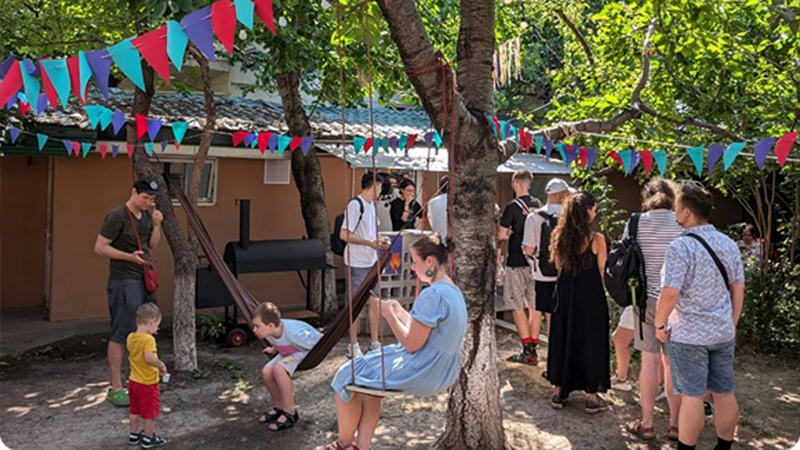
You need somewhere you can relax, meet others, exchange ideas, and feel part of a community without the obligations attached to home or work. That environment is known as a third place.
A third place is somewhere you return to regularly, feel comfortable spending time, and gradually become familiar with the people around them. A neighbourhood café, library, park, cultural centre, coworking space, bookstore, community garden, or regular social club are examples of a third place.
For residents, newcomers, remote workers, students, and international professionals, finding a third place in Yerevan can make the city feel less like a temporary location and more like home.
What Is a Third Place?
The term “third place” was developed by sociologist Ray Oldenburg to describe informal gathering places outside the home and workplace. Oldenburg defined them as public places that support regular, voluntary, informal, and anticipated gatherings. They are places where people can talk, relax, observe community life, and build relationships without needing a formal invitation.
Classic examples of third place include:
Cafés and neighbourhood coffee shops
Libraries
Community and cultural centres
Barbershops, gyms, clubs, and workshops
Coworking spaces with an active social environment
A third place is generally accessible, informal, welcoming, convenient, and affordable enough for people to visit repeatedly. It usually has regular visitors, but newcomers should also feel comfortable entering. Conversation may be an important activity, although visitors should also be able to read, work, or enjoy being around other people without pressure to socialise.
Most importantly, not every café or coworking venue automatically becomes a third place. A beautiful interior and fast Wi-Fi are useful, but community cannot be created through design alone. The space must also support regular, comfortable, low-pressure interaction.
How Third Places Turn Individuals Into a Community?
Community rarely appears after one organised networking event. It usually develops through repeated, ordinary encounters.
You recognise someone you saw last week. A barista remembers your order. Two people working at nearby tables begin discussing a local event. Someone invites a familiar face to join a workshop, language club, or weekend activity. These small interactions create familiarity, and familiarity gradually produces trust.
This is why regularity matters more than novelty. Third places work because people return to them as part of their normal routines. Over time, visitors stop feeling like anonymous customers and start feeling that they belong.
Third places also create what researchers call bridging social capital. It is a connection between people who may have different occupations, ages, nationalities, backgrounds, or social circles. These relationships may begin as “weak ties,” but they can provide valuable information, introductions, opportunities, emotional support, and a wider understanding of the local community.
Research suggests that different types of social places create different network structures, with some community venues being particularly effective at connecting people beyond their existing friendship groups.
This matters in a diverse city such as Yerevan, where local residents, students, relocated professionals, travellers, and remote workers may share the same neighbourhood without naturally meeting one another.
A coworking space in Yerevan can become a third place when it offers more than desks, such as communal areas, recurring events, and a culture in which members recognise and support one another.
A successful third place gives these groups a comfortable reason to occupy the same environment. People do not need identical interests or backgrounds. They only need a welcoming setting, opportunities for repeated contact, and enough openness to acknowledge one another.
Third places therefore operate as informal community infrastructure. They help information travel, make neighbourhood life more visible, encourage collaboration, and give people a sense that they are participating in the city rather than simply living in it.
Why Third Places Matter in the 21st Century for Gen Z?
Modern life provides more ways to communicate than ever, but constant digital contact does not always create meaningful social connection.
Remote work and online education have also weakened the separation between the first and second places. For someone working from home, the kitchen table may be a home, office, meeting room, and lunch area at the same time. Without another environment to visit, daily life can become efficient but socially narrow.
This is particularly relevant for Gen Z. Digital platforms are central to how younger people learn, work, communicate, and build communities. Online groups can provide real friendship and belonging; research into platforms such as Discord shows that repeated, low-pressure online interaction can reproduce some characteristics of a third place. Nevertheless, virtual interaction does not fully provide the spontaneous conversations, shared physical experiences, and casual encounters available in a welcoming public venue.
The need for these connections is not merely a lifestyle trend. The World Health Organization reported in 2025 that approximately one in six people worldwide experiences loneliness. Among people aged 13 to 29, reported rates were between 17% and 21%, with particularly high rates among teenagers. WHO identifies inadequate community infrastructure and some forms of digital technology use among the factors that can contribute to disconnection.
At the same time, evidence suggests that younger generations still value physical public spaces. An American Library Association study found that 52% of surveyed Gen Z and Millennials had visited a physical library during the previous year. The report emphasised that younger visitors use libraries not only for books, but also for collaboration, programmes, gaming, learning, and connection.
For Gen Z, a good third place offers several things that social media often cannot:
Unplanned conversations without algorithms
A sense of presence without constant performance
Opportunities to meet people outside an existing network
Space to work, create, rest, and socialise
A local identity connected to a real neighbourhood
A third place does not require visitors to abandon digital life. Instead, it gives digital relationships and interests somewhere to become tangible.
How to Find a Third Place in Yerevan?
Finding a third place in Yerevan is less about searching for the city’s most fashionable venue and more about identifying somewhere that fits naturally into your life.
Start with location. A potential third place should be easy enough to visit regularly. A spectacular venue on the other side of the city may remain an occasional destination, while a comfortable place near your home, workplace, university, or usual walking route can become part of your weekly routine.
Then evaluate the atmosphere. Look for a place where staying for a while feels normal. You should not feel rushed to leave immediately after finishing a drink, completing a task, or attending an event.
A promising third place usually has six characteristics:
Accessibility: You can reach it conveniently and visit without complicated planning.
Affordability: Returning several times a month is financially realistic.
Comfort: The environment supports both social interaction and independent activity.
Regulars: Familiar visitors and staff give the space continuity and character.
Openness: Newcomers, including people attending alone, are treated naturally.
Participation: Events, shared tables, clubs, workshops, or common areas create opportunities to connect.
In Yerevan, potential third places can include independent coffee shops, libraries, parks, galleries, language clubs, creative studios, community organisations, and mixed-use venues that combine work and social activities. A café in Yerevan becomes a genuine third place when visitors are welcomed as regulars rather than processed as short-term transactions.
Once you find a promising venue, give it time. Visit on the same day or at approximately the same time for several weeks. Attend one recurring event. Sit in a shared area rather than the most isolated corner. Greet the staff, ask a simple question, or comment on an activity taking place nearby.
You do not need to become highly social immediately. Third places also serve introverts and people who enjoy being alone in public. Reading, working, or drinking coffee in the presence of familiar people can create what might be called connected solitude: being independent without feeling isolated.
Finally, support the place you choose. Purchase something when appropriate, respect shared areas, attend events, recommend the venue responsibly, and contribute to the atmosphere that makes you feel welcome.
Letters and Numbers Is Your Third Place in Yerevan!
Letters and Numbers brings together a coworking environment in Yerevan, a coffee shop, and a programme of community events.
Located at Tumanyan Street in central Yerevan, it is designed for people who want to work productively while remaining connected to the social and creative life around them.
You can arrive with a laptop, meet a friend for coffee, join an event, exchange ideas with other visitors, or simply spend time outside your home and office. There is no single correct way to participate. The goal is to find a rhythm that makes the space familiar.
A city begins to feel like home when it contains places where your presence is familiar. Visit Letters and Numbers, explore the coworking and café areas, check the upcoming events, and take the first step toward finding your own third place in Yerevan.